Weeknote #39: Fall
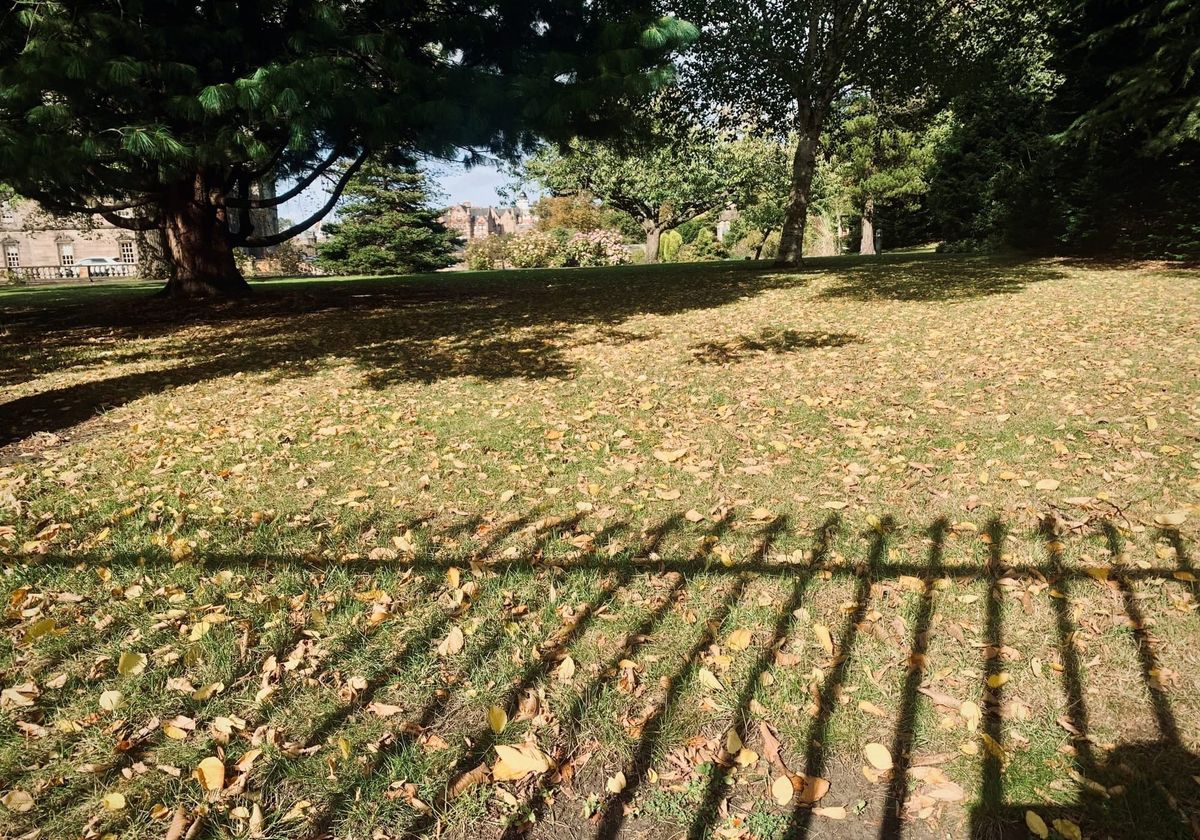
Big Autumn vibes this week with bright, crisp mornings and a significant drop in temperature (apart from one day where it was 20 degrees which felt a bit weird). A deep breathe was needed after a very busy couple of weeks. I'm seeing the next fortnight as a short sprint to the half-term break.
What happened this week?
Monday started with a long online training session on Equality Impact Assessments. A little dry, but a solid grounding for leaders across the Library prompting us to interrogate and improve existing processes.
This was followed by lunch with a good friend who is really not well. Some difficult conversations about the future and a reminder to just get on and do things.
Plans for an upcoming AI talk at the Library with Sam Illingworth and John Fitzgerald are falling into place. It's been good to spin something up in rapid time and set the groundwork for an ongoing event series focussed on complexity and critical thinking.
In other AI news, I've been working with Digital Scholarship Libarian, Sarah Ames, on a book chapter focussed on the Library's "responsible adoption" of AI. We also had an AI-focussed catch up with Maja Maricevic and Mia Ridge (British Library) and Jason Evans (National Library of Wales). There are gaps emerging in our approach to AI across comms, governance and resourcing so it's great to share thinking and work with others operating in similar environments.
This was followed by an update from the Creative Content Exchange (CCE) team. The model of access to cultural collections is undoubtedly shifting and there is recognition that if it's published online, it's already been scraped. There's pressure to both gatekeep public access to collections and look for opportunities to monetise large-scale access. As ever, we know that FOMO is not strategy and, where possible, Libraries should play the long game.
A post by Oli Lovell rang true this week as I followed up on actions from last week's legal deposit meetings – as complexity increases (and legal deposit is incredibly complex) so too do layers of governance and control. I liked Oli's concept of "decisions being perishable" and the aim of good governance being "to lower the food mileage of decisions".
On Thursday I set up a technology review of the infrastructure supporting the Moving Image Archive. We know that the platform and underlying systems need a refresh, and socialising technical knowledge is the first step towards building a robust case for change.
An interesting catch up with brokers talking through cyber insurance options, including response retainers and full insurance policies. This was followed by a useful catch up with Alison Brogan, Cyber Resilience Coordinator at SCVO. The next step is a catch up with the Cyber Scotland team at Scottish Government.
On Friday, I met with our new project manager, Coleman Tharpe, who will be working on a UKRI-funded project to improve the Library's ATR workflows. Timelines are tight, but all the right people are now in place.
As a side note, I've observed my daughter navigate digital comms with her friends and it's a little depressing to see short-form video content leak into What's App, via status updates and channels. I just want apps to do one thing, and one thing well.
Interesting things
- I keep spotting positive feedback from first-time GovCamp attendees.
- Bridging the digital disconnect, a post from Manifesto's Zoe Gorbier, responding to Ash Mann's The Hidden Cost report – a focus on creating catalysts for change at leadership level through "a sense of urgency" and "proof of value".
- After the Living Museum, Jonathan Talmi has released Virgil, an AI guide that answers questions using objects from museum collections. I'm hoping the reaction from the culture sector will be a little gentler this time around.
- Lauren Pope has published the AI in Charity Content Report with some great insights:
- There's a real split on using AI to write: Some people use it to get past an intimidating blank page. Others see the blank page as where the real thinking happens.
- People feel deeply conflicted: Ethical concerns are near universal, but they rarely change behaviour.
- Policy, governance and training are thin: Most people haven't had formal training, and many don't feel supported by their organisation.
- Peer communities of practice are the bright spot: They reduce anxiety, isolation and shame around AI use, and they help people learn.
- Will Australia become AI’s copyright-busting safe haven? I hope no.
- Jonathan Manton, Director of Digital Collections & Access at Yale Library, on the impact of bot traffic to digital collections.
- Representing a digitised book with a single thumbnail – A reminder of the Flipbook project by the Internet Archive (from 2013!).
- DC's National Geographic Museum of Exploration looks cool with some large-scale multimedia "experiences" - although, as Sofia Widmann noted this week, flashy, expensive experiences don't always produce deep impact.
- Dedicated "labs" in cultural organisations seemed to be in decline, but The MET is talking about their digital experiments at EmTech.
- Canyon Groove - generate music with canyons, because why not? (h/t Ben Templeton).
- Two nice Bluesky things: The circle of life and a metaphor.
Watching, listening, reading, doing
📖 I've been dipping into AI for the Information Professional by Andrew Cox – a detailed overview for the Library sector setting out how and where to use AI.
📺 Easy (Netflix) - the algorithm suggested this from 2016 ⭐⭐⭐⭐
🎧 John Ronson's The Castle is my first ever audio book – although, I'm clinging to the belief that you need to engage with the text to have "read" a book.
🪴I spend a lot of time in my office and finally got round to buying a single plant for my desk. We'll see how long it last with the radiators kicking in this week.
🏃 I signed up for the Edinburgh Half Marathon next May, with an aim to combine with the Hackney Half and raise some money for MacMillan Cancer Support.